What each copied hormone does
How Retatrutide Uses Three Hormones
Eli Lilly made one 39-amino-acid test drug from small protein pieces. It acts like GLP-1, GIP, and glucagon, which affect hunger, stored fat, insulin, and blood sugar.
Retatrutide copies three hormones with different jobs
Eli Lilly made retatrutide as one drug with three hormone jobs. Each hormone already has a task in your body.
Your gut releases GLP-1 after food. GLP-1 can ease your hunger and slow the emptying of your stomach.
Think of the hormones as workers with separate tasks. Your gut also releases GIP after meals.
GIP tells your pancreas to send insulin. Insulin moves sugar from your blood into cells.
Between meals, your pancreas releases glucagon. It may push blood sugar higher and help your body use stored fat.
Retatrutide acts like all three at once. Older weight drugs often copy one or two.
GLP-1 and GIP may help you eat less and limit a blood-sugar rise.
The glucagon effect may use more stored fat. It can also raise your pulse.
Phase 1 first tested early safety. Later studies found large average weight loss.
Separate studies can't prove which drug works best. Retatrutide hasn't been approved.
Phase 3 studies must give a firmer answer. These hormone effects can't show whether your benefit would beat your risk.
Hunger, insulin, and body fat change in different ways
GLP-1 is a gut hormone used after you eat. It can reduce hunger and keep food in your stomach longer.
That GLP-1 effect may help you eat less. It also asks your pancreas for insulin as blood sugar rises [3].
In a dish, cells reacted to retatrutide's GLP-1 effect. The test didn't show whether that effect was safer or better in people.
GIP is another gut hormone used after meals. It asks your pancreas for insulin and affects how your body stores fat.
Cells in a dish also reacted to retatrutide's GIP effect [3]. The test couldn't show what a person would feel.
GIP may add to changes in body fat. Human studies have to test that idea.
Glucagon comes from your pancreas between meals. It can raise blood sugar while making your body burn stored fat.
Cells in a dish reacted to retatrutide's glucagon effect too [3]. That doesn't tell us how much blood sugar would rise in a person.
Glucagon sets retatrutide apart from drugs with two jobs. Less hunger and more burning of stored fat may work together.
The fatty-liver study fits that idea. Liver fat fell sharply in those people [5].
Phase 1 looked for early harm. Phase 1 couldn't settle long-term benefit.
A dish of cells can't show how your whole body will respond. Studies in people must show benefit and harm.
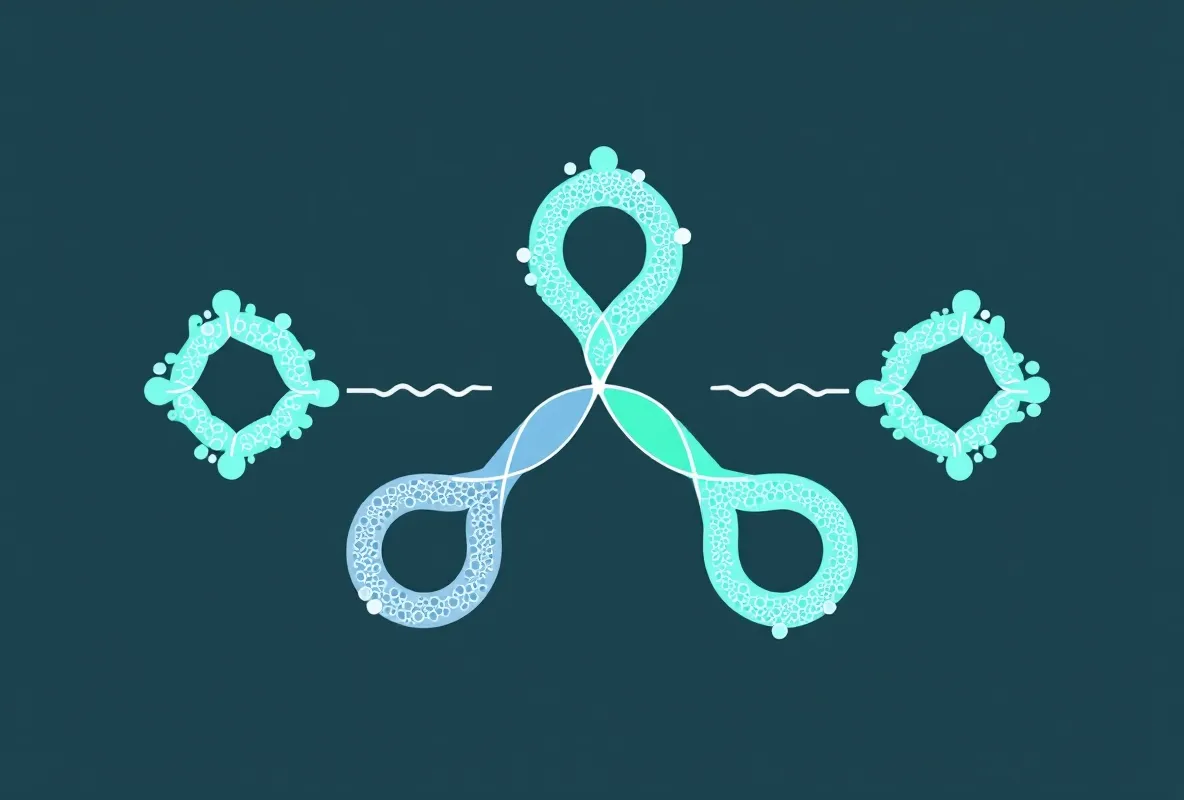
Lab cells reacted to all three hormone effects
In 2024, scientists froze cells and took close pictures [3]. The work used cells in a lab, not whole people.
The pictures showed retatrutide touching three spots on cell walls. Each spot reacts to one of the three hormones.
The pictures were sharp enough to show atoms. That detail can't tell you what a person would feel.
The paper marked one small loop as 1. You don't need that label to understand the finding.
Retatrutide sat a little differently at each hormone spot. Even so, cells at all three spots reacted.
That is the plain finding from the lab. It shows how one drug can copy three hormones.
Phase 2 tells us what happened in people. Pictures of cells alone can't prove weight loss or safety.
The lab labels don't guide your care. Human results matter more for your health.
Studies in people still have to weigh benefit against harm.
Less hunger and more fat burning may add weight loss
The three hormones do different jobs. Together, they affect food eaten and stored fat burned.
- GLP-1 can curb hunger and food intake.
- GIP can help insulin and affect fat storage.
- Glucagon can make the body burn more stored fat at rest.
That gut hormone is used after food. Eating less while burning more stored fat may bring greater weight loss.
A 2024 review said average weight loss in Phase 2 came near results after weight-loss surgery [13]. The comparison used group averages.
Retatrutide doesn't work like surgery for you. A 2025 review looked across Phase 1/2 work [6].
It called the roughly 24% loss at 12 mg over 48 weeks a large step. Glucagon also brings a catch.
Pulse rose in the studies. The hunger hormone can keep food in your stomach longer.
Both problems grew with higher amounts. Larger studies must show whether the trade is sound for people.
Retatrutide uses three hormones, but GLP-3 isn't one
Some websites call retatrutide "GLP-3." That online nickname is wrong.
No hormone in your body has that name. The number 3 only counts the drug's three hormone jobs.
Calling the drug GLP-3 hides the real hormones. GLP-1 can curb hunger.
GIP helps your pancreas release insulin after food. Glucagon can make your body burn stored fat.
Those are the other two hormones. GLP-3 still isn't a real hormone in your body.
The name GLP-3 won't explain the drug or protect your health. Retatrutide references gives the full paper names.
Even the right name can't make an unapproved drug safe for you.